On any given day, Mote's 200-plus researchers are in the field collecting information or asking for public help gathering information for important marine research studies. These environmental updates change regularly, reflecting Florida's ever-changing environment. Mote invites you to visit regularly for new information.
- Marine mammal & sea turtle strandings
- Sea turtle nesting
- Tips to protect marine wildlife
- Beach Conditions Reporting System
- Red tide
- Florida Keys environmental observations
To report a sick or injured marine animal, please see the guidelines below.
Marine Mammal & Sea Turtle Strandings
Mote Marine Laboratory’s Stranding Investigations Program responds 24 hours a day seven days a week to reports of sick, injured and dead marine mammals and sea turtles for animals in Sarasota and Manatee county waters.
For deceased animals, program staff performs detailed post-mortem examinations known as necropsies (animal autopsies). The information gathered during necropsy helps to evaluate the long-term mortality trends of these species, especially as it relates to pathology or human-related activities. Such research data are crucial to species management and conservation. In the case of live-stranded sea turtles, SIP works with Mote's Sea Turtle Rehabilitation Hospital for treatment with the goal of release. For live-stranded mammals, SIP works with state and federal agencies to determine the best course of action for each situation, often collaborating with rehabilitation-and-release partners.
To report a stranded dolphin, whale, manatee or sea turtle (dead or alive) within Sarasota and Manatee counties, please call the Stranding Investigations Program's 24-hour hotline: 888-345-2335.
Outside of Sarasota or Manatee counties, please call the FWC Wildlife Alert hotline at 1 (888) 404-FWCC (3922).
Tips for Protecting Marine Life
As you enjoy Southwest Florida’s beaches and coastal waters, please be vigilant for marine animals and follow the best practices below to avoid harming sea turtles, dolphins and manatees. These tips matter year ‘round — especially during the summer boating season, when sea turtles are swimming just offshore to mate and coming ashore to nest, and dolphins and manatees are also on the move for breeding and feeding. Sea turtles, dolphins and manatees are all protected by federal law.
Tips for Boaters:
 Follow safe-boating laws, regulations and guidelines from the U.S. Coast Guard and Florida Fish and Wildlife Conservation Commission.
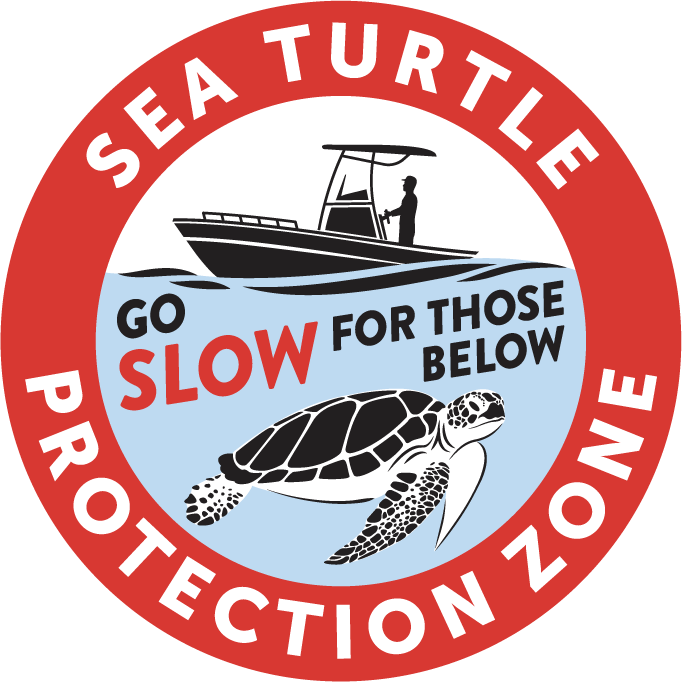
 - Follow posted signs for slow-speed zones—it's required by law. In addition, we encourage boaters in Sarasota County to go as slow as safely possible in the voluntary Sea Turtle Protection Zone mapped by Mote to address hotspots of boat strikes on sea turtles.
- Use vigilance to avoid striking marine animals:
- Ask one of your passengers to be the designated wildlife spotter.
- Wear polarized sunglasses to see marine life in your path.
- Follow 10 dolphin-friendly fishing and viewing tips. Click here for a PDF. These tips were made with dolphins in mind, but they're also great guidelines for the best ways to view all large marine animals.
- Never feed marine wildlife. Click here to watch a PSA about why it’s harmful and illegal to feed wild dolphins: dontfeedwilddolphins.com
- Stow trash and line when under way. Marine debris that accidentally blows overboard or out of a truck can become ingested by or entangled around marine life.
- If you observe a manatee mating herd—several manatees gathered as males vie to mate with a female—watch the manatees from at least 100 feet away. Coming any closer might disrupt the herd's natural mating behavior or put people at risk of being injured by the manatees, which typically weigh more than 1,000 pounds.
Tips for Beachgoers:
Sea turtle nesting season takes place from May 1-Oct. 31 on Southwest Florida beaches. On nesting beaches, light from waterfront properties can disorient nesting female turtles and their young, which emerge at night and use dim natural light to find the sea. Also, beach furniture, trash and other obstacles can impede sea turtles and their young.
Here are some “do and don’t” tips to keep our beaches turtle-friendly:
- DO stay away from sea turtle nests marked with yellow stakes and tape, and seabird nesting zones that are bounded by ropes.
- DO remain quiet and observe from a distance if you encounter a nesting sea turtle or hatchlings.
- DO shield or turn off outdoor lights that are visible on the beach from May through October. Use FWC approved turtle-friendly lighting products.
- DO close drapes after dark and stack beach furniture at the dune line or, ideally, remove it from the beach
- DO fill in holes that may entrap hatchlings on their way to the water.
- DON’T approach nesting turtles or hatchlings, make noise, or shine lights at turtles.
- DON’T use flashlights, head lamps or fishing lamps on the beach.
- DON’T encourage a turtle to move while nesting or pick up hatchlings that have emerged and are heading for the water.
- DON’T use fireworks on the beach.
- DON’T walk dogs on Sarasota or Manatee county beaches— but check county websites for exceptions such as Brohard Paw Park in Venice.
Sea Turtle Nesting Updates
Sea turtles nest along Southwest Florida beaches from May through October. Mote's Sea Turtle Conservation and Research Program monitors 35 miles of beaches in Sarasota and Manatee counties daily to check for new nests.
- 2023 Nesting Numbers
- 2022 Nesting Numbers
- 2021 Nesting Numbers
- 2020 Nesting Numbers
- 2019 Nesting Numbers
- 2018 Nesting Numbers
- 2017 Nesting Numbers
- 2016 Nesting Numbers
- 2015 Nesting Numbers
- 2014 Nesting Numbers
- 2013 Nesting Numbers
- 2012 Nesting Numbers
- 2011 Nesting Numbers
- 2010 Nesting Numbers
- 2009 Nesting Numbers
- 2008 Nesting Numbers
- 2005-2007 Nesting Numbers
Beach Conditions Reporting System
The Beach Conditions Reporting System (BCRS) provides several types of information about beach locations in Florida and other coastal states. The BCRS is a valuable tool during Florida red tide events, communicating the presence of dead fish, respiratory irritation among beachgoers, water color, and wind direction.
Red Tide
Mote Marine Laboratory studies Karenia brevis, the organism that causes red tides in the Gulf of Mexico. Click here for red tide FAQs, Mote research and other key info for the public.
Information about Seafood and Red Tide
Please note that it is safe to eat shellfish that are commercially harvested and sold in fish markets, restaurants and other outlets. Florida has a well-established monitoring program for all commercial shellfish beds and these beds are closed when affected by red tide or other environmental conditions. Note: It is not advisable to harvest shellfish recreationally, unless you first check on the status of the location (open or closed) with the Florida Department of Agriculture and Consumer Services. Click here for more information.
For recreational fishing: Fish that act as they would normally when hooked should be safe to eat as long as they are fileted first and the innards discarded.
More Information about Red Tide
For conditions throughout the Florida Gulf coast, with information about cell concentrations observed at specific locations and closed shellfish areas, please see the FWC web site and follow the link to “Red Tide Current Status.” The FWC Red Tide Status Line is now available for callers to hear a recording detailing Red Tide conditions throughout the state. FWC updates the recording each Friday by 5 p.m. after sampling efforts for the week have been completed and analyzed.
- Red Tide Status Line: (866) 300-9399 (toll-free inside Florida only); (727) 552-2448 (outside Florida).
- For information about the Human Health and Red Tide Studies funded by the National Institutes for Environmental Health Services, click here.
- If you need immediate assistance regarding health related issues, please call the Marine and Freshwater Toxin hotline at 1 (888) 232-8635. It is staffed 24 hours a day, 7 days a week.
- For more information about water conditions on Sarasota County beaches, please click on this link to the Sarasota County Healthy Beaches website.
- Info on Trichodesmium.
Florida Keys Environmental Observations
With support from and coordination with the Florida Keys National Marine Sanctuary (FKNMS), Mote is encouraging the public to report unusual marine events on Florida's Coral Reef to the Southeast Florida Action Network (SEAFAN). The goal of the network is to help the scientific community better understand the nature and causes of marine events that adversely affect marine organisms, and assist ongoing research efforts to assess and monitor events as they develop. Understanding these events will help scientists and managers determine whether the events are natural or are linked to human activities.
Also in partnership with FKNMS, Mote scientists also operate Florida Keys BleachWatch, a team of trained recreational, commercial and scientific divers who help monitor and report on conditions on reefs. Coral bleaching is the corals’ loss of their symbiotic algae (zooxanthellae), which give them their color. Bleaching is a natural event that occurs to some extent annually in the FKNMS. Records show that coral bleaching has been occurring for many years in the Florida Keys and also indicate that the frequency and severity of these events has steadily increased since the 1980s.